



















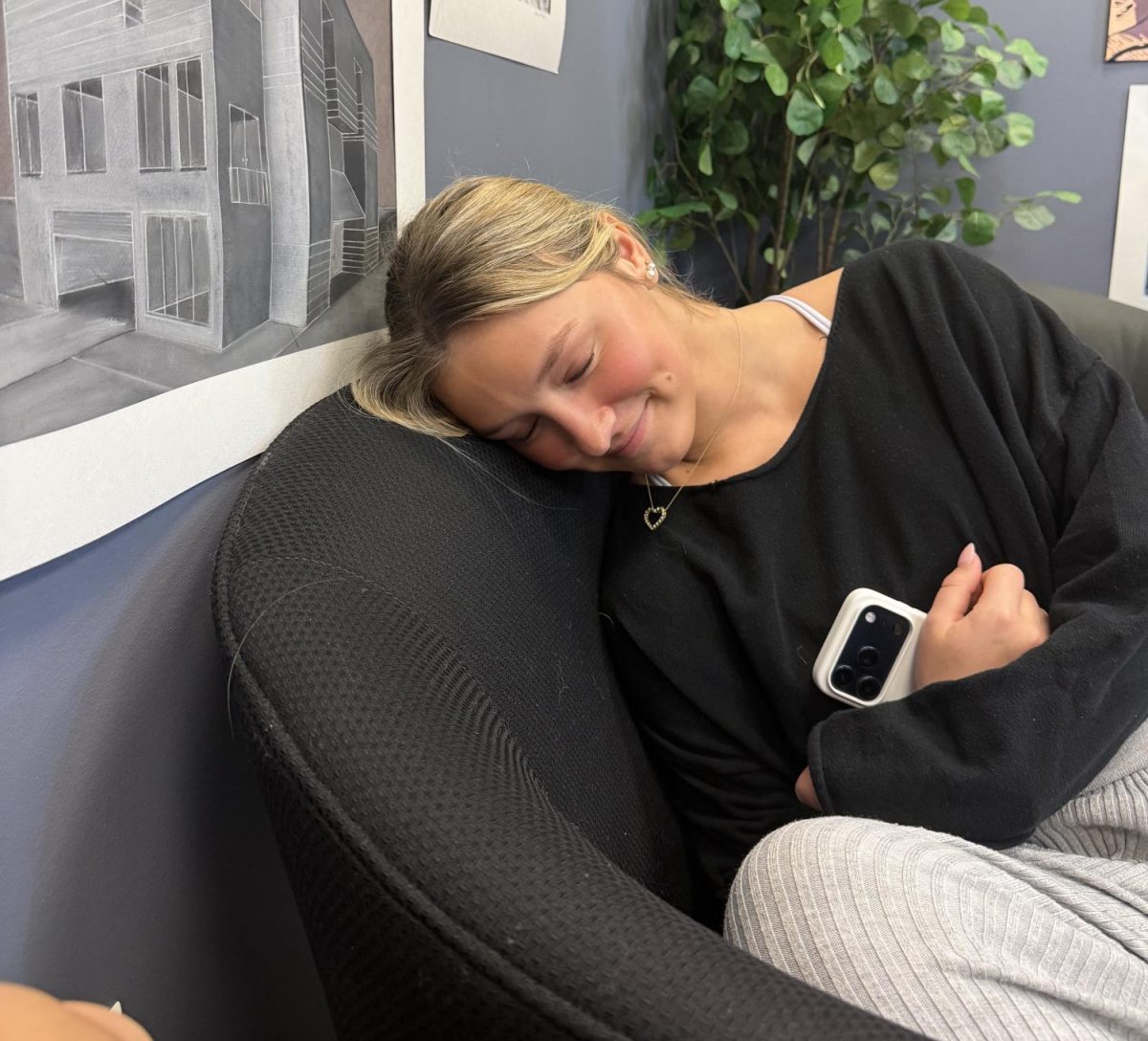

By September 2025, more than half of the United States had put a ban or restriction on phone use in schools.
Starting this year, Masco has enforced a new phone policy, where students are not allowed to use their phones during class periods.
Assistant Principal Christopher Kobs left most of it up to the teachers at Masco to enforce the rule in their own classrooms.
“The more that the teachers support it, then it’s going to be easier to have it become a cultural norm,” said Kobs.
Administrators eased the ban into the classroom, starting with cell phone free signs in the hallways and doors around the school. Some teachers have “phone jails” and baskets, while some just ask that students leave their phones in their bags.
“If there’s consistency throughout the school and various classrooms, it’s easier to both enforce it and have students know what the clear expectation is,” said Kobs.
Students have reported a change in the classroom and seeing teachers strongly enforcing the phone ban.
“Teachers have stopped the class and taken phones from students or taken points away for being on their

phones,” said senior Kaleigh O’Brien.
Some of Masco’s senior class members agree with the policy and believe that not having their phones doesn’t really affect them.
“I see where they’re coming from with policy, but it honestly hasn’t changed anything much in my day to day life in school,” said senior Elizabeth Shoemaker. “I don’t usually need to use my phone. I mean, I’m either talking to my classmates or doing my work.”
While some students don’t see any change during their school days, others see not only a change, but many benefits.
“I’ve seen students become more focused on their work, and it stops them from being able to cheat,” said O’Brien.
Some students weigh out the good and bad and feel it’s hard to determine whether it’s a negative or positive policy.
“There’s pros and cons. Like without your phone, you can get a lot more done…but also it’s hard sometimes
, because you might need your phone for certain things,” said senior Cate Shaffer.
Teachers have noticed many cons of cellphones while educating and the effect they have on their students.
“The biggest change I’ve noticed is that when students keep their phones in their bags during class, they actually talk to and genuinely engage with me and with one another,” said English teacher Annie Rollins. “They become more present—laughing, connecting, and truly enjoying each other’s company.”
Some teachers don’t see any negatives and are even hoping for a complete ban in the future.
“I honestly don’t see any downsides to this year’s cell phone rule. If anything, I wish our school would take it a step further and ban cell phones from classrooms altogether,” said Rollins. “As long as cell phones are accessible, they’ll continue to distract and disrupt learning.”
Teachers’ perspectives on things also vary from school to school when it comes to how distracting phones can be.
According to a Pew Research Center survey from 2023, “One-third of public K-12 teachers say students being distracted by cellphones is a major problem in their classroom, and another 20% say it’s a minor problem.”
The policies seen at public schools around Massachusetts differ from school to school, but that may change with a statewide ban.
Kobs said if the Senate passes the bill to make schools cell phone-free, Masco must follow this state policy.
As the state considers a wider ban, the question remains: are phones in the classroom a helpful tool or a major distraction?