



















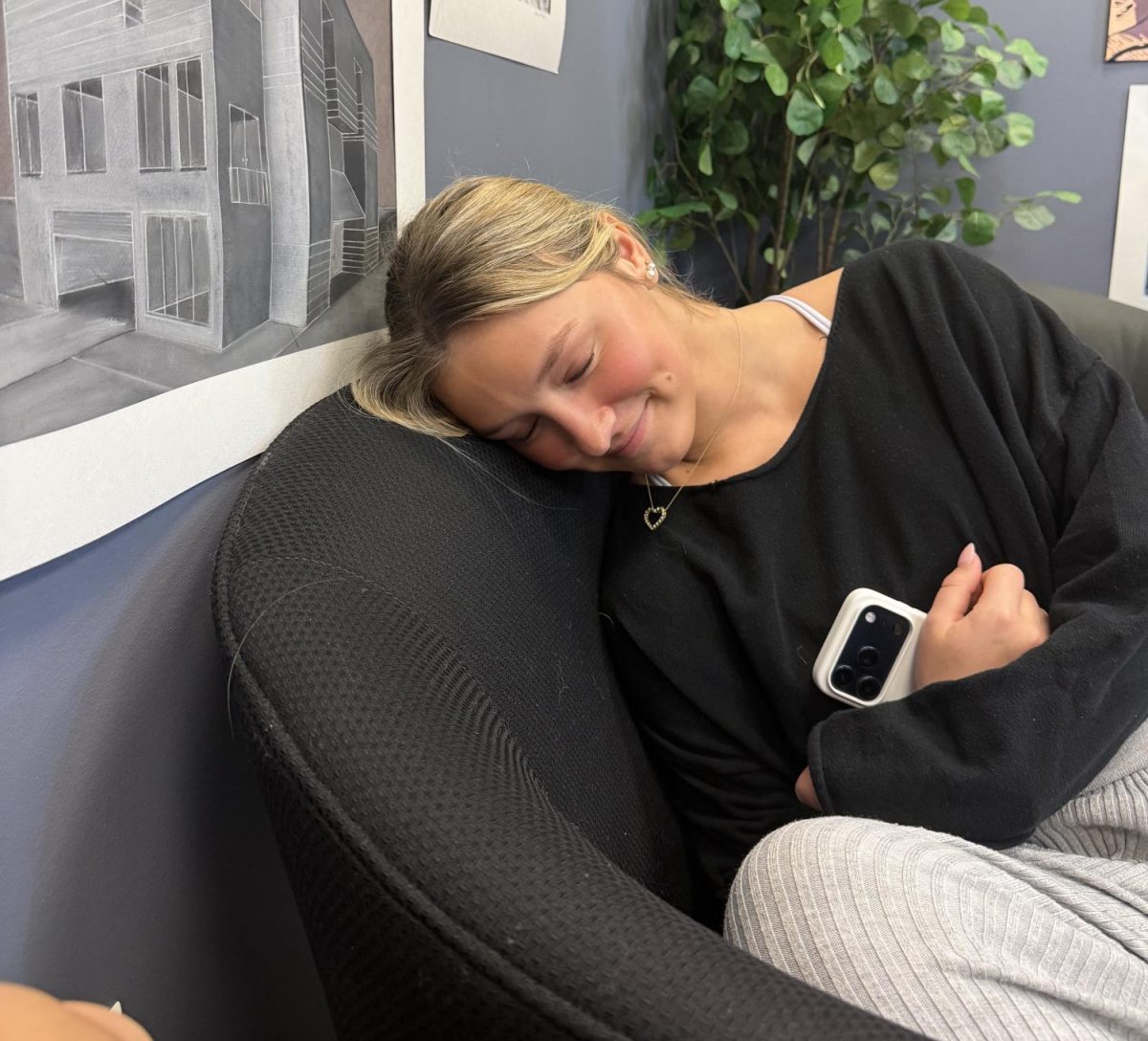

With a new cell phone policy now enforced by Masconomet and other schools around the state, many students are frustrated with the new rules.
Many teachers began the school year with their own procedure for dropping phones off into a holder when entering the classroom. However, in Semester 2, the policy has gone school-wide, and every classroom is now equipped with a holder. Failure to do so results in a detention, and the possibility of the phone being locked in a safe until the day is over.
“I think the concept is a good idea, but the execution is poor. In one of my classes, my teacher lets us have it on us and just tells us to put it away,” said senior Cam Buccchiere. “But he’s like, ‘the second the way I run it doesn’t work, then your phones will go in the pouches.’ I think going straight to locking them up, with no leeway in between, is not good.”
Senior Class President Lucas Magnifico doesn’t have a problem with the policy, especially as a stepping stone towards a potential state law which could go into effect next year.
“I think that they are using the [phone] pockets as somewhat of an experiment for next year. I have no problem with it, but knowing how a lot of kids in my generation are very tied to their phones, that is going to be the biggest problem,” said Magnifico. “I’ve heard kids getting detention over their phone usage, it sounds like they are taking it very seriously now; all you can really do as a student is abide by it or else you’re breaking the rules.”
Assistant Principal Christopher Kobs believes that there should be a cell phone policy and is ready to enforce it as needed.
“Ultimately, the cell phone itself is a major distraction,” said Kobs. “It can also be used as a resource for cheating, recording, or communicating, so academic integrity can be jeopardized. I want to see students and teachers in the lesson itself, and with the phone, even with the alerts, the buzzing, the beeping, etc., it can lead to not being focused on what’s usually going on in the classroom.”
Kobs also understands the questions and concerns during an emergency, and why it’s important for the school to handle the situation.
“When parents, guardians, or anybody sends information to a student, sometimes it should be processed by the school,” said Kobs. “Say you are going to be getting some information that could be very emotional; sometimes that needs to take place in a safe environment rather than the student getting that information in a particular class.”
Another reason for the cell phone ban is due to students taking long breaks during class.
“From my own personal observations, when students take breaks from class to go to the bathroom, the nurse, or any type of passing time, I happen to see students with their phones out reading messages while they are walking,” said Kobs. “So I’m typically correcting that behavior, I’m telling students to put their phone away in preparation for the things that are forthcoming.”
The MA State Senate has passed a bill for the 2026-27 school year that will involve a ‘bell-to-bell’ ban on cell phones in schools. Masco has implemented the policy early in order to prepare students for the next year.
“If you get caught with your phone, you should put it in the pouch,” said Magnifico. “It will send an example to other students.”
Regardless of the policy, students might be frustrated with the amount of surveillance hovering over them.
“I think that students are just fed up with schools not much overriding kids, but inserting themselves into a lot of a kid’s school experience,” said Magnifico.
Buccchiere believes that upperclassmen should be exempt from the rule.
“Juniors and seniors are 17-18, going to be in college, and they’re not going to have phone pouches in college,” said Buccchiere. “If you stay on your phone and don’t do work, that’s your fault.”
Whatever the argument is, the policy is in place at Masco, as it continues to be enforced in schools around the country as well. Ideally, the lack of distraction will improve both the academic and social experience of school.